Moneda Intelligence August News Wrap Up
August 2026 Energy Niger Niger has signed a $1.9 billion deal with Canadian group, Zimar, for the construction and operation of a 100,000 barrels per day (bpd) refinery and…
August 2026
Energy
Niger
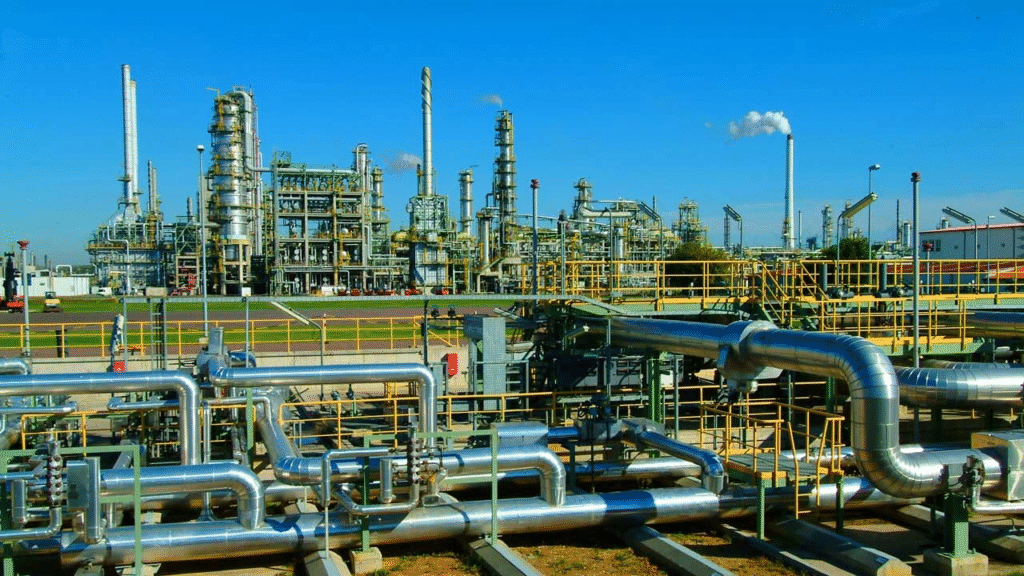
Niger has signed a $1.9 billion deal with Canadian group, Zimar, for the construction and operation of a 100,000 barrels per day (bpd) refinery and petrochemical complex in Dosso.
What this means…
In line with its plans to expand domestic petroleum refining, the government of Niger has signed a $1.9 billion agreement with Canadian group Zimar and its partner, High Tech, for the development of a 100,000 bpd refinery and petrochemical complex in Dosso. The project will operate under a build-operate-transfer model, with three years allocated for construction and 13 years of operation before the facility is transferred to the Nigerien government.
The scale of the project is significant for a country whose existing refining infrastructure is considerably smaller. Niger’s Zinder refinery has a refining capacity of 20,000 bpd, meaning the proposed Dosso refinery would increase the country’s total refining capacity by 500%. Feedstock for the refinery is expected to come from the country’s current crude production which has a capacity of about 110,000 bpd which also increased 5-fold in 2024 after phase 2 of the Agadem oilfield development and the commissioning of the Niger-Benin pipeline providing access to international export markets.
With the current refining capacity, the country produces 2.5 million liters of gasoline and diesel every day which pales in comparison with its demand of 2.5 million liters and 2 million liters respectively thus highlighting a combined shortfall of 1.9 million liters daily. This shortfall has led to the country’s dependence on imports and the Dosso refinery is intended to ease this dependence. We estimate that the refinery will deliver 5.5 million liters of gasoline and 7.5 million liters of diesel which is about 190% more than the shortfall potentially converting the country from a net importer to a net exporter of petroleum products. This can also support the broader economy by reducing foreign exchange outflows and significantly increasing inflows.
Source: Niger Signs $1.9 Billion Deal for 100,000-BPD Dosso Refinery
Agriculture
Nigeria
Armyworm infestation has destroyed about 790 hectares of farmland in Birniwa local government of Jigawa State.
Our thoughts…
For farmers in Birniwa Local Government Area of Jigawa State, months of planting, spending and waiting for harvest have been undone by an armyworm infestation that has affected more than 790 hectares of farmland and about 520 farmers, resulting in significant losses for households that depend heavily on agriculture for food and income.
The infestation, first reported in mid-August 2026, affected farms across Gajarma, Dalari, Bursili, Kulawa, Kupsa, Kirya and Korewa. The pest, locally known as Maremare, attacked sorghum, millet, groundnuts, hibiscus, beans and sesame, with some farmers reporting up to 90% of expected yields loss.
The financial impact of this infestation is potentially substantial. Jigawa’s official agricultural data puts average yields at about 1.15 tonnes per hectare for Sorghum, 0.95 tonnes for millet, 2.19 tonnes for groundnut, 1.21 tonnes for cowpea, and 1.02 tonnes for sesame. Using these yields and 2026 commodity price data, the gross value of crops produced across the 790 hectares could be estimated at about ₦1.2 billion under an equal crop-mix scenario. The actual financial loss would depend on the crop mix and extent of damage, but a 50% average destruction rate would imply roughly ₦590 million loss in agricultural output.
The Birniwa infestation is part of a broader history of armyworm-related crop losses in Nigeria. Between 2016 and 2018, the FAO estimated that Fall Armyworm, a species of armyworm caused about $268 million in agricultural losses and damaged approximately 7.8 million hectares of crops. While the 790 hectares affected in Birniwa is small relative to the national scale of that outbreak, the concentration of damage within a single local government area illustrates how quickly an infestation can translate into significant losses for farming communities.
Reports show that Jigawa’s armyworm infestation started in 2016, with a more widely reported outbreak occurring in 2017, when armyworms threatened rice, sorghum, guinea corn and maize, prompting the state to deploy about 630 pest-control agents to affected areas. In 2018, another outbreak was reported in Hadejia, where the state distributed pesticides to affected farmers and reportedly brought the infestation under control within a week.
So far, no country with a history of armyworm infestation has successfully eradicated the pest completely. However, training farmers ahead of planting seasons to identify and manage armyworms, promoting integrated pest management practices, using crop varieties with greater resistance to pest damage where available, and maintaining field and crop sanitation can help prevent infestations from spreading and limit the economic cost of future outbreaks. Where outbreaks do occur, the 2018 experience in Jigawa highlights the importance of timely intervention to contain their spread.
Source: Jigawa Farmers Count Losses As Armyworm Destroys 790 Hectares of Farmlands
Mining
Zimbabwe
Zimbabwe and Karo Platinum Private Limited have signed a 25-year Special Mining Lease Agreement, to provide long-term security of tenure and fiscal framework for the Karo Platinum Project.
What this means…
The Karo Platinum Project is 85% owned by Karo Mining Holdings, a subsidiary of the Cyprus incorporated mining company, Tharisa plc, and 15% by Generation Minerals, a Zimbabwean government-owned company. The project dates back to 2018, when Karo Mining Holdings, and the Government of Zimbabwe signed an Investment Project Framework Agreement to develop an integrated Platinum Group Metals (PGM) mining complex on the Great Dyke – a massive expanse of volcanic rock formation that runs for more than 550 kilometers (342 miles) through the center of Zimbabwe.
Following the subsequent award of a special grant and its further conversion to a mining lease, construction of the project commenced in December 2022, followed by pilot mining in 2023 supported by $240 million in infrastructure investment. The full-scale realization of the first phase of the project, however, requires an investment of about $1 billion and this new special mining lease agreement significantly derisks the project and paves way for this investment. Under the agreement, the project will receive a 5-year tax holiday and duty exemptions for imported goods and chemicals used in the mineral processing. Other fiscal elements remain aligned with the prevailing regulations including a 7% royalty charged on revenue from sales of produced platinum.
The immediate objective of the specialized framework is to improve the project’s viability; enable it attract investments and expedite the achievement of production by the second half of 2027. Phase 1 is designed to produce approximately 226,000 ounces of PGMs annually and with the license area estimated to hold resources of about 2.1 million ounces, the scale of the project’s potential impact is unprecedented. The project will increase the country’s PGM production by 21% and contribute immensely to the country’s export earnings as demand for platinum rises globally. The true impact will, however, be determined by the level of local content contribution to the project. It is expected to employ more than 1,000 people, potentially reaching around 3,000 at peak. There are also potential opportunities in the demand for local contractors, transport, engineering, equipment and other mining-related services. Overall, this development displays the ripple effect of seemingly small fiscal incentives – how they impact investor sentiment and subsequently create local opportunities.
Source: Karo Platinum secures 25yr special mining lease in Zimbabwe